Not all sideways curvatures of the spine need major surgery. Here’s how this condition is treated amongst kids.

Scoliosis is a condition that occurs when a normally straight spine curves laterally (side-to-side), forming an “S” shape. When viewed on an X-ray, the spine of a person with this condition appears like an “S” or a “C” shape rather than a straight line.
Scoliosis can also be detected at all ages, depending on the type, and it’s more common in girls than boys (ratio of 7:1). In Singapore, the prevalence of adolescent idiopathic scoliosis in schoolgirls is 1.4 percent at 11 to 12 years of age, and 2.2 percent at 13 to 14 years of age. As such, older children have a higher prevalence of scoliosis.
Contrary to common misconception, scoliosis is also not caused by carrying heavy objects, such as heavy school bags on one shoulder, because of sports or physical activities, poor standing or sleeping postures, or a lack of calcium in the diet.
We deep dive into the condition and what you need to know.
What are the different types and causes of scoliosis?
Adolescent idiopathic scoliosis (AIS)
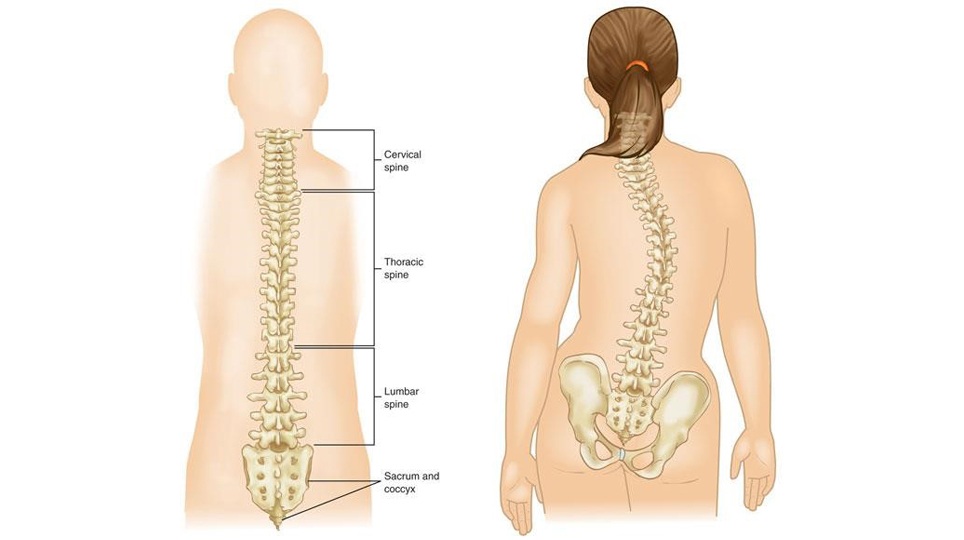
Source: https://orthoinfo.aaos.org/en/diseases--conditions/idiopathic-scoliosis-in-children-and-adolescents/
The most common form of scoliosis ― seen in 90 per cent of the cases ― is adolescent idiopathic scoliosis (AIS). This occurs in kids as young as 9 years old. There is no established cause found, but research points towards genetic causes.
Although this type of scoliosis can develop in toddlers and young children, idiopathic scoliosis most often begins during puberty, during the adolescent growth spurt. In many cases, the abnormal spinal curve is stable, although in some children, the curve is progressive and becomes more severe over time.
Girls are also more likely to develop larger curves that require medical care.
Congenital scoliosis

Source: https://www.childrenshospital.org/conditions/congenital-scoliosis
Congenital scoliosis is due to congenital birth defects in the spine and is often associated with other organ defects. It occurs early in pregnancy, when one or more of the vertebrae in the spine don’t form completely. This can cause a sharp angle (hemivertebrae) to develop in the spine.
In other babies, the developing spine is unable to fully separate into distinct vertebrae. As a result, two or more of the vertebrae may be partially fused.
Neuromuscular scoliosis
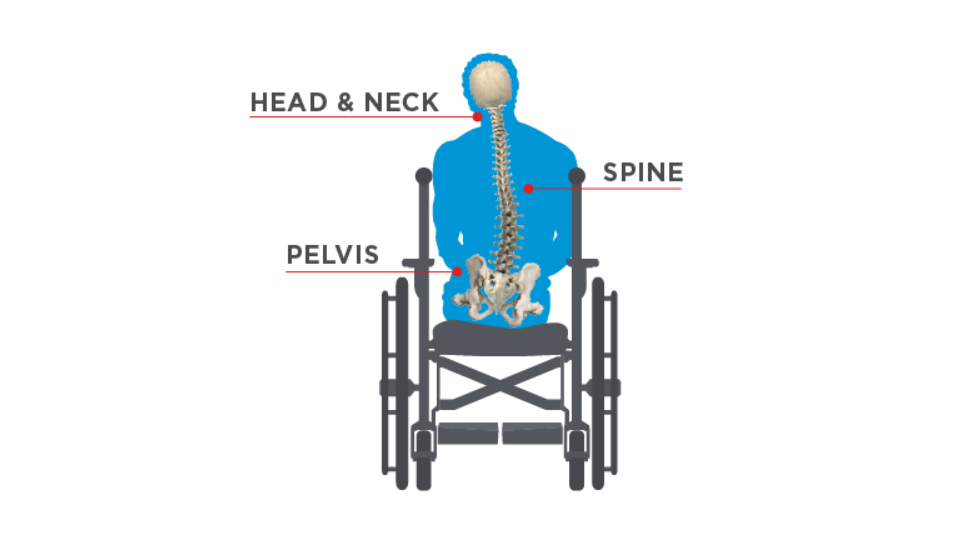
Source: https://www.hudsonvalleyscoliosis.com/what-is-scoliosis/neuromuscular/
Neuromuscular scoliosis is due to the loss of control of the nerves or muscles that support the spine. Common causes of this type of scoliosis are cerebral palsy and muscular dystrophy.
Nerves and muscles are unable to maintain appropriate balance and alignment of the spine and trunk. In comparison with idiopathic scoliosis, neuromuscular scoliosis is more likely to produce curves that progress, and continue progressing into adulthood.
Signs and symptoms to look out for
- An “S” shaped curve in the back when standing
- Curvature of the body to one side when viewed from the front or back
- Uneven shoulders. One shoulder is higher than the other. If your child is wearing clothes with straps over the shoulder, you will notice that straps for the left and right shoulder are not of the same length.
- Uneven chest. One breast is higher than the other in girls.
- Uneven waistline. One side of the waist is tilted up.
As children may not complain of discomfort or pain, parents should observe for these signs of scoliosis. Consider the “forward bend” test to examine your child’s back for possible scoliosis:
1. Ask your child to stand up straight.
2. Ask them to bend down and try to touch their toes, with their knees straight.
3. Carefully look at the back while your child is bending down. Children with scoliosis will have an uneven back, where one side is higher than the other.
How is scoliosis diagnosed?
Scoliosis in school children is commonly detected during screening in schools. The Adam’s forward bending test is used to observe for asymmetry of the trunk when the child bends forward.
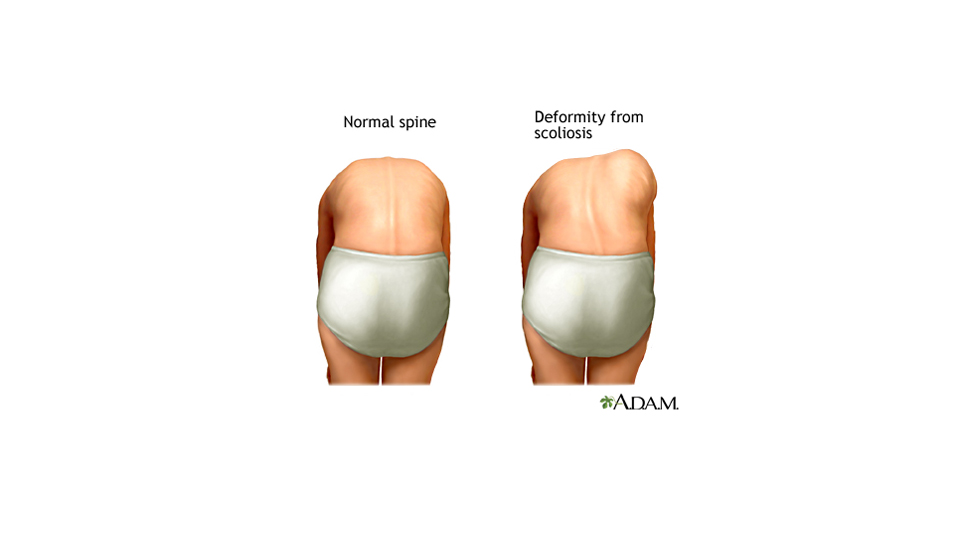
Source: https://medlineplus.gov/ency/imagepages/19465.htm
If your child is suspected to have scoliosis, doctors will request a long spine standing scoliosis X-ray. The ultra-low dose imaging system enables the whole body, frontal and lateral images to be taken simultaneously. This reduces the need for multiple X-rays to be taken, which reduces the overall radiation dose that the child is exposed to.
An MRI and CT scan is only done if the curve is abnormal or the cause of scoliosis is unusual.
What treatment options are there in Singapore?
The primary objective for spinal deformity treatment is to stop the progression of scoliosis and maintain a balanced spinal alignment. Uncontrolled scoliosis progression may result in a large deformity and lead to restriction in the lungs and heart function. Treatment includes the following approaches:
#1 Observation
This includes regular examinations and follow-up X-rays. Curves that are less than 25 degrees can be observed at four to six monthly intervals. A growing child who has a curve greater than 25 degrees or a progressive curve will require treatment in the form of a brace.
#2 Bracing
Bracing is designed to stop the progression of the spinal curve, but it does not reduce the amount of angulation already present. Thoraco-lumbar-sacral orthosis (TLSO) is one of the more commonly used scoliosis braces.
#3 Surgery
Recommended when the curves are large or greater than 45 degrees to prevent further progression. It’s also the best option to control the curve when brace treatment is unsuccessful. The most common surgical treatment for scoliosis is spinal fusion using special titanium screws, hooks, rods and bone graft. Doctors will carefully straighten the curve through incisions made along the back of the spine. If the scoliosis is confined to the chest region, a thoracoscopic “keyhole” technique requiring only four to five small openings on the side of the chest can be done.
Using modern spinal instrumentation, scoliosis patients who have undergone surgery can lead normal and independent lives and can also participate in most, if not all forms of sports. However, in the first few months after surgery, they’ll need to be careful with physical activities.
For professional medical advice for your child, consider visiting a paediatrician at centres like Thomson Paediatric Centre.
Photos: iStock
Like us on Facebook and check SmartParents regularly for the latest reads!
In case you missed these expert advice…
Is my child’s school bag too heavy?